

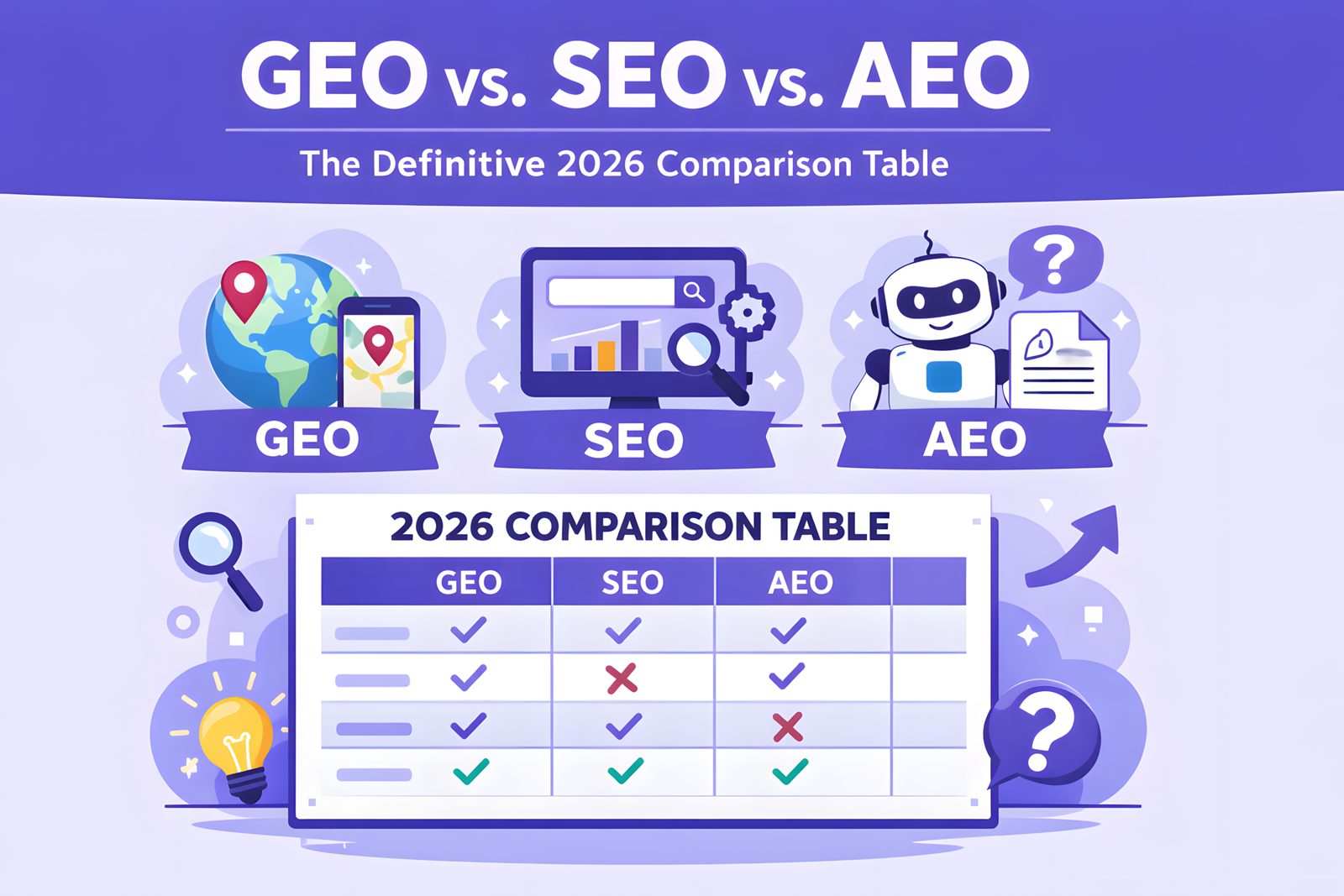
Search isn’t what it used to be. In 2026, users don’t just type keywords and click blue links—they ask conversational questions, expect instant answers, and let AI tools like ChatGPT, Perplexity, and Google AI Overviews do the heavy lifting. As a result, three optimization strategies now compete for attention: traditional search engine optimization (SEO), answer engine optimization (AEO), and generative engine optimization (GEO).
If you’re a marketer, content creator, or SMM pro trying to stay visible, understanding GEO vs. SEO vs. AEO isn’t optional—it’s essential. These aren’t competing tactics; they’re complementary layers that work best together. This guide breaks them down clearly, shows exactly how they differ in 2026, and gives you a ready-to-use comparison table plus actionable tips to future-proof your strategy.
What Is SEO in 2026?
Search engine optimization (SEO) remains the foundation of digital visibility. It focuses on helping your web pages rank higher in traditional search engine results pages (SERPs) on Google, Bing, and similar platforms. The goal? Drive clicks and website traffic through optimized keywords, backlinks, technical performance, and high-quality content.
In 2026, SEO has evolved with core web vitals, E-E-A-T (Experience, Expertise, Authoritativeness, Trustworthiness), and mobile-first indexing. But it still prioritizes getting users to your site rather than answering their questions on the search page itself. Without strong SEO, your content often won’t even be discovered by AI tools.
What Is AEO (Answer Engine Optimization)?
Answer engine optimization (AEO) is all about becoming the direct, authoritative answer to user questions. It powers featured snippets, voice search results, People Also Ask boxes, and AI Overviews. AEO uses concise, scannable formats like FAQs, schema markup, and natural-language answers so engines can extract and display your content instantly—often without requiring a click.
Think of it as “zero-click” optimization. In 2026, with conversational queries exploding, AEO ensures your brand shows up when someone asks, “What’s the best social media scheduling tool for small teams?”—right in the answer box or voice response.
What Is GEO (Generative Engine Optimization)?
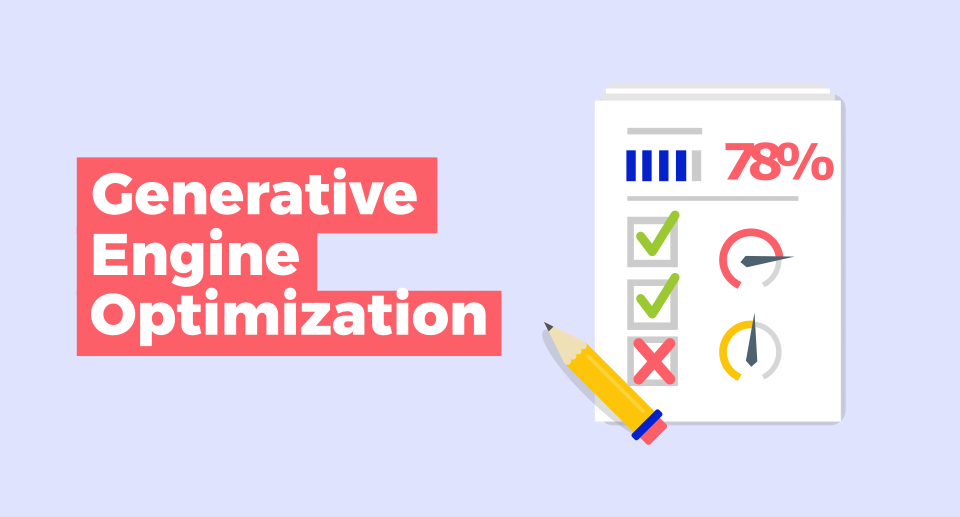
Generative engine optimization (GEO) takes things further into the AI era. It optimizes your content to be cited, referenced, or synthesized inside fully generated responses from tools like ChatGPT, Claude, Gemini, and Perplexity. GEO focuses on clarity, authority signals, structured data, and “extractable” elements (stats, quotes, lists) that AI models love to pull into their summaries.
Unlike SEO’s focus on ranking pages or AEO’s emphasis on direct answers, GEO aims for brand mentions and citations in AI-generated narratives. Early adopters in 2026 are seeing citation rates jump dramatically because AI engines reward trustworthy, well-structured sources over simple keyword matches.
The Definitive 2026 GEO vs. SEO vs. AEO Comparison Table
Here’s the clearest side-by-side view of how these strategies stack up right now:
| Aspect | SEO (Search Engine Optimization) | AEO (Answer Engine Optimization) | GEO (Generative Engine Optimization) |
|---|---|---|---|
| Primary Goal | Rank web pages in traditional SERPs to drive clicks and traffic | Get featured as the direct answer in snippets, voice results, and AI Overviews | Get cited or synthesized in AI-generated responses across chatbots and generative tools |
| Target Platforms | Google, Bing traditional results | Google AI Overviews, voice assistants, featured snippets, Perplexity quick answers | ChatGPT, Claude, Gemini, Perplexity, Copilot, and other LLMs |
| User Behavior | Keyword-based searching and browsing lists | Asking direct, natural-language questions | Conversational queries and multi-step AI interactions |
| Content Style | Long-form, keyword-rich, comprehensive pages | Concise, question-first, scannable (FAQs, lists) | Structured, authoritative, extractable (stats, quotes, clear entities) |
| Key Tactics | Backlinks, technical SEO, keyword optimization, E-E-A-T | Schema markup, BLUF (“bottom line up front”) answers, llms.txt files | Entity building, consistent brand data, AI-friendly formatting, authoritative external mentions |
| Success Metrics | Rankings, organic traffic, click-through rates | Snippet appearance rate, voice query coverage, zero-click visibility | Citation frequency, AI mention share-of-voice, brand inclusion in generated answers |
| Visibility Format | Blue links in ranked results | Highlighted answer boxes or voice responses | Embedded citations or synthesized summaries in AI output |
| Growth Trend in 2026 | Steady (+12% YoY average) but increasingly competitive | Explosive (+340% YoY in early data) | Rapid (+180% YoY) as generative tools dominate |
| Best For | Driving website visits and conversions | Instant authority and zero-click wins | Long-term brand authority in AI conversations |
How SEO, AEO, and GEO Work Together in 2026
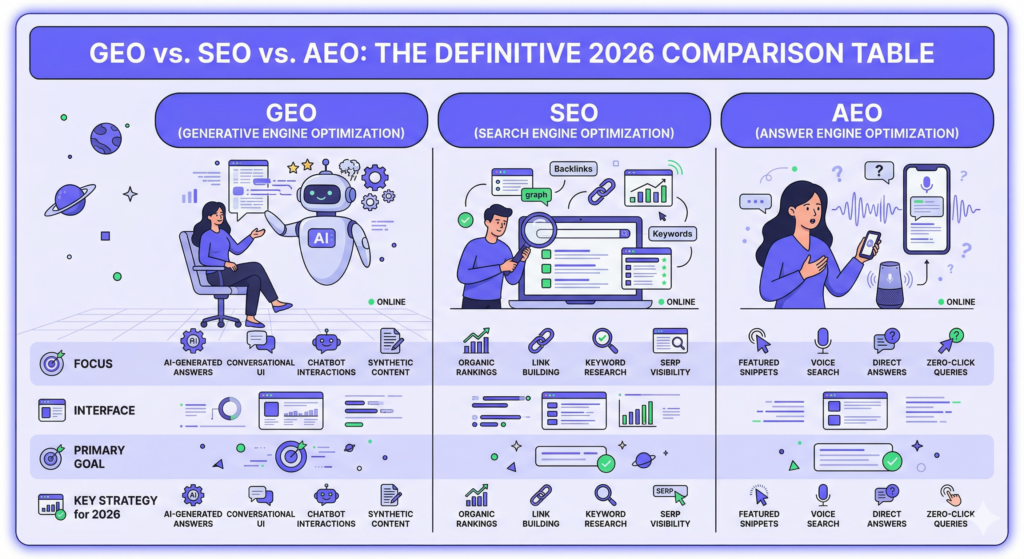
The smartest marketers treat these as layers, not rivals. Strong SEO provides the crawlable foundation. AEO adds the direct-answer polish that feeds AI Overviews. GEO ensures your content is cited when AI synthesizes deeper responses.
For example, a well-optimized blog post on “social media trends 2026” can:
- Rank in Google SERPs (SEO)
- Appear in an AI Overview snippet (AEO)
- Get cited by ChatGPT as “According to SMMpro research…” (GEO)
Actionable Tips to Optimize for All Three
Ready to put this into practice? Here are practical steps tailored for SMM pros and content teams:
- Start with SEO fundamentals — Ensure fast load times, mobile optimization, and internal linking. Use tools to target long-tail keywords that match conversational intent.
- Build AEO-friendly structure — Lead with clear answers, add FAQ schema, and include “bottom line up front” summaries. Test how your content appears in Google AI Overviews.
- Level up to GEO — Use stats, expert quotes, and consistent entity descriptions (e.g., always define your brand the same way across the web). Create an llms.txt file to guide AI crawlers and publish content that’s easy to extract (tables, bullet points, numbered steps).
- Measure what matters — Track traditional rankings plus AI citation tools and share-of-voice in generative results. Tools that monitor AI mentions are becoming must-haves.
- Create once, optimize everywhere — Write scannable, authoritative content that serves humans first—AI engines reward helpfulness above all.
Common Pitfalls to Avoid
Don’t chase one strategy at the expense of others. Ignoring SEO means AI can’t find you. Over-optimizing for keywords alone makes content feel robotic to both users and AI. And skipping structured data in 2026 is like leaving money on the table.
Key Takeaways: Your 2026 Search Strategy
- SEO is still essential for discovery and traffic.
- AEO wins the instant-answer game and zero-click visibility.
- GEO builds lasting authority in the age of AI-generated content.
The winners in 2026 won’t be the brands with the most backlinks—they’ll be the ones that show up as the trusted answer across every search surface. By understanding GEO vs. SEO vs. AEO and using the comparison table above as your roadmap, you can create content that ranks, answers, and gets cited.
At SMMpro, we’re already helping teams blend these strategies for maximum impact. What’s one tactic you’re testing first? Drop it in the comments—we’d love to hear how you’re navigating the new search landscape.
FAQ
Frequently Asked Questions About GEO vs SEO vs AEO in 2026
SEO (Search Engine Optimization) helps your content rank in traditional Google and Bing results so users click through to your site. AEO (Answer Engine Optimization) makes your content appear as the direct, highlighted answer in featured snippets, voice search, and Google AI Overviews. GEO (Generative Engine Optimization) goes further by getting your brand cited or synthesized inside full AI-generated responses from tools like ChatGPT, Perplexity, and Gemini. In simple terms: SEO drives traffic, AEO delivers instant answers, and GEO builds long-term AI authority.
Start with strong SEO as your foundation — without it, AI tools can’t discover your content. Layer on AEO next for quick wins in zero-click answers (perfect for trending social media questions). Then add GEO for deeper authority, especially when users ask complex queries like “best social media tools for small teams in 2026.” At SMMpro, we recommend treating them as a stack: SEO gets you found, AEO gets you chosen, and GEO gets you remembered by AI.
Yes — and the smartest SMM teams already do. The strategies are complementary, not competitive. A single high-quality post can rank in Google (SEO), appear in an AI Overview (AEO), and be cited by ChatGPT (GEO) if it’s structured correctly. Optimizing for just one leaves major visibility gaps in 2026, especially as over 60% of searches now involve conversational or AI-assisted queries.
GEO turns your social media trend reports, tool roundups, and strategy guides into authoritative sources that AI tools love to reference. For example, when someone asks an AI “What are the top Instagram Reels trends for Q3 2026?”, well-optimized GEO content gets directly quoted or summarized with attribution. This drives brand mentions, builds trust, and funnels traffic back to your SMMpro resources without relying solely on clicks.
Focus on three simple changes: (1) Lead every section with a clear, direct answer, (2) Add FAQ schema and scannable lists/tables, and (3) Include “bottom-line-up-front” summaries. These tactics make your content perfect for voice search and AI Overviews. Test your posts by copying a paragraph into ChatGPT and seeing if it pulls your key points — that’s the fastest AEO feedback loop.
Traditional SEO uses rankings, traffic, and click-through rates. GEO success is measured by AI citation frequency, share-of-voice in generative answers, and brand mentions across ChatGPT, Perplexity, and Gemini. Tools that track AI visibility (plus manual prompt testing) are essential. At SMMpro, we track both — because a drop in traditional traffic can be offset by a massive rise in AI-driven brand authority.
No. SEO is evolving, not disappearing. In 2026 and beyond, traditional search still drives the majority of discoverability, while GEO and AEO handle how that content is used in AI responses. The winning formula is a hybrid approach: strong SEO foundations plus GEO/AEO layers. Brands that ignore any layer risk becoming invisible in the new search landscape.
Go back to your top-performing content and add: clear entity descriptions, unique statistics, expert quotes, and scannable tables. Create consistent brand mentions across the web (your “entity footprint”). Add an llms.txt file to guide AI crawlers. These small updates can dramatically increase how often AI tools cite your older SMMpro articles without rewriting everything from scratch.
Start with Google’s AI Overviews, ChatGPT, and Perplexity — simply test your content by asking relevant questions and note what gets cited. Free tools like Schema Markup generators, llms.txt creators, and basic AI visibility checkers are also highly effective. For deeper insights, combine them with your existing SEO platform.




What do you think?
The comparison between SEO, AEO, and GEO is spot on! I’ve noticed a big shift towards conversational queries and instant answers. It’s clear that adapting to AEO and GEO will be crucial for staying competitive in 2026.
This breakdown of GEO, SEO, and AEO really highlights how much search has evolved—especially with AI-powered answers shaping user expectations. It’s a timely reminder that content strategy needs to keep pace with these shifts, not just target keywords but also anticipate conversational intent. Thanks for the clear comparison that helps marketers adapt their approach for 2026 and beyond.
This breakdown of GEO, SEO, and AEO really highlights how much search has evolved—especially with AI-powered tools shaping user expectations. It’s a timely reminder that content strategy needs to keep pace with these shifts, not just focus on keywords anymore. Thanks for the clear comparison and practical takeaways.
This comparison really highlights how much search has evolved—especially with AI-powered tools shaping user expectations. It’s a timely reminder that content strategy needs to keep up with conversational search trends, not just keyword targeting. The distinction between SEO, AEO, and GEO is crucial for marketers looking to stay ahead in 2026.
The breakdown of GEO as an entirely new layer—optimizing content for how AI models generate responses rather than just rank pages—really stood out. It makes sense that we’ll need to treat AI tools as their own audience, not just a traffic source. Personally, I’ve seen my own FAQ-style content perform better in voice searches, so AEO feels like a natural next step to test alongside traditional SEO.
The point about AEO being “zero-click” really stood out — it’s wild how much search behavior has shifted from browsing to demanding instant snippets. Personally, I’ve noticed my own queries starting with full questions instead of keywords, especially when using voice search at home. Feels like marketers will need to balance both deep-dive SEO content and these quick-answer formats to stay visible.
Hello, every time i used to check blog posts here in the
early hours in the break of day since I like to find out more and more.
We’re a group of volunteers and opening a new scheme in our community.
Your web site provided us with valuable information to
work on. You have done an impressive job and our entire community will be thankful to you.
The shift from click-driven SEO
Reading this made me rethink my approach a bit. Sometimes you don’t realize your assumptions until someone lays it out like this.
The breakdown of SEO, AEO, and GEO as complementary layers rather than competing tactics really stands out—too often people treat them as silos, but in practice they reinforce each other. For example, strong SEO builds the foundation, while AEO makes your content snippet
Came across this while researching something related and ended up reading the whole thing. Well structured and thoughtful.
This breakdown of the shift from traditional SEO to AEO and GEO in 2026 really highlights how critical it is to optimize for conversational queries and AI overviews rather than just keywords. Focusing on structured data and immediate value delivery seems essential now that users are trusting tools like Perplexity to answer their questions instantly. It’s a clear reminder that our strategies must evolve to match this new, answer-first search landscape.
This comparison is incredibly timely given how quickly search has shifted toward conversational queries in 2026. I think the real challenge lies in optimizing content that satisfies both the traditional ranking factors of SEO and the direct answer requirements of AEO simultaneously. The distinction regarding local intent in GEO also stands out as a crucial pivot point for businesses relying on proximity-based discoveries.