
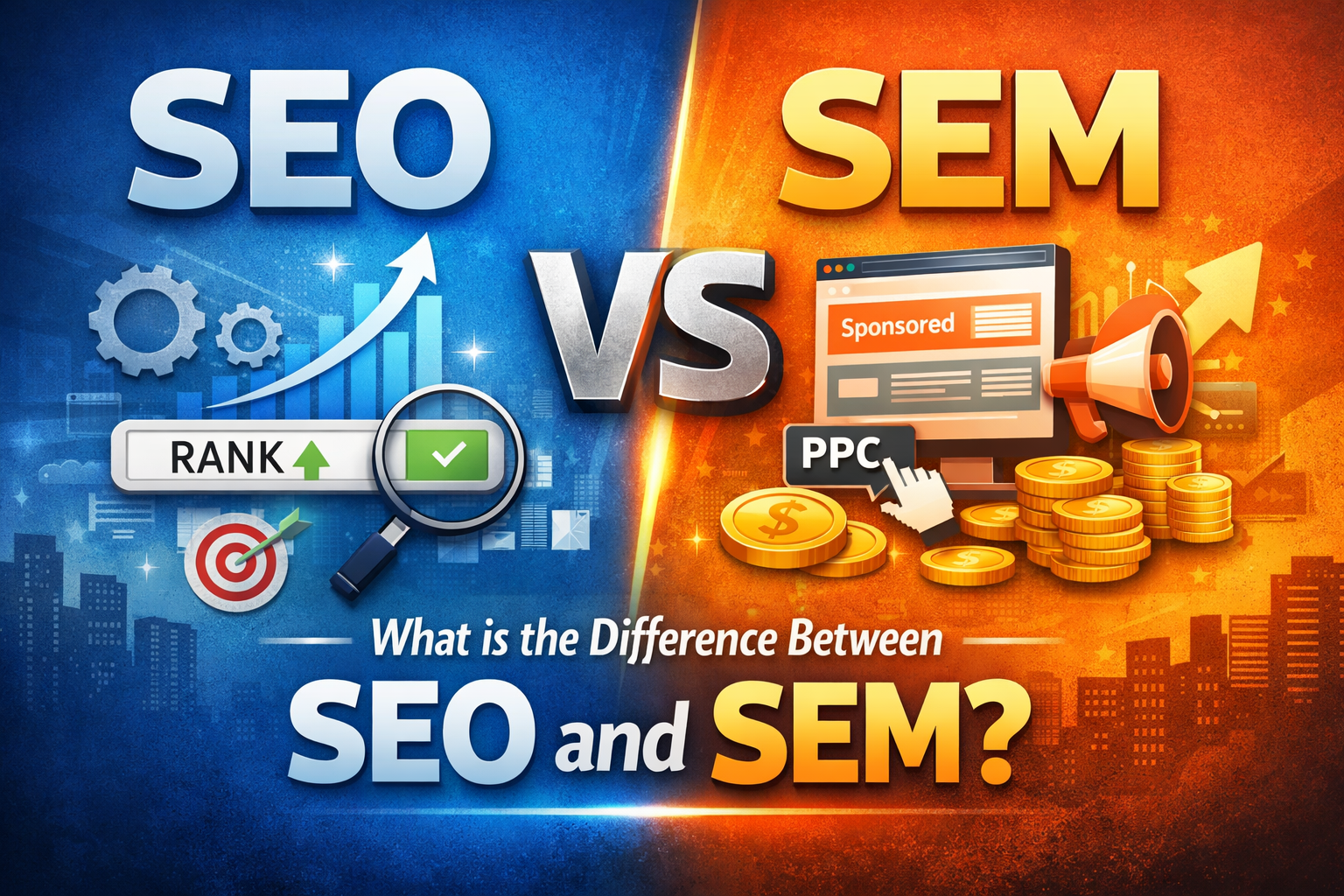
In the world of digital marketing, two terms are often used interchangeably: SEO and SEM. While both aim to increase visibility on search engines like Google, they are not the same. Understanding the difference between SEO vs. SEM is essential for businesses, marketers, and content creators who want to build a strong online presence and drive targeted traffic to their websites.
In this guide by SMMPro, we will break down the key differences between Search Engine Optimization (SEO) and Search Engine Marketing (SEM), explain how they work, and show you when to use each strategy for the best results.
What is SEO (Search Engine Optimization)?
SEO (Search Engine Optimization) is the process of improving a website so it ranks higher in organic (free) search engine results. The goal of SEO is to increase visibility without paying for ads.
When users search for something on Google, the results that appear naturally (not marked as ads) are ranked using SEO factors such as content quality, keywords, backlinks, and website performance.
Key Components of SEO
- On-Page SEO
- Keyword optimization
- Meta titles and descriptions
- Internal linking
- High-quality content
- Proper heading structure
- Off-Page SEO
- Backlinks from other websites
- Social signals
- Brand mentions
- Guest posting
- Technical SEO
- Website speed optimization
- Mobile friendliness
- Secure HTTPS connection
- XML sitemap
- Crawlability and indexing
Example of SEO
If you write a blog post optimized for the keyword
“difference between SEO and SEM”, and it appears on page one of Google without paying for ads, that is SEO.
What is SEM (Search Engine Marketing)?
SEM (Search Engine Marketing) is a broader digital marketing strategy that includes paid advertising on search engines. The most common form of SEM is Pay-Per-Click (PPC) advertising, where businesses pay to appear at the top of search results.
Unlike SEO, SEM can bring traffic immediately because ads show as soon as the campaign starts.
Key Components of SEM
- Paid Search Ads (PPC)
- Google Ads
- Bing Ads
- Sponsored search results
- Keyword Bidding
- Businesses bid on keywords
- Higher bids can improve ad placement
- Ad Copy Optimization
- Writing compelling ad headlines
- Using call-to-action phrases
- Targeting the right audience
- Landing Page Optimization
- Fast loading pages
- Relevant content
- Strong conversion elements
Example of SEM
If you search for “best SEO services” and see results marked as Sponsored, those are SEM ads.
SEO vs. SEM: Key Differences
Understanding the difference between SEO and SEM is important for choosing the right digital marketing strategy for your business. Although both methods aim to increase visibility in search engines, they work in different ways and deliver different types of results. SEO (Search Engine Optimization) focuses on generating organic traffic by improving website content, structure, and authority so that it ranks higher in unpaid search results. This approach usually takes time to show results, but once a website ranks well, the traffic can continue for a long period without additional cost per click.
On the other hand, SEM (Search Engine Marketing) involves paid advertising to appear at the top of search engine results pages. With SEM, businesses bid on keywords and pay each time a user clicks on their ad, which is why it is often called Pay-Per-Click (PPC) advertising. Unlike SEO, SEM can generate traffic immediately after launching a campaign, but the results only last as long as the advertising budget is active.
Another key difference between SEO vs. SEM is the return on investment. SEO usually provides a higher return over time because organic rankings can bring consistent visitors without ongoing ad costs, while SEM requires continuous spending to maintain visibility. SEO is best suited for long-term growth, brand authority, and consistent website traffic, whereas SEM is ideal for short-term campaigns, product promotions, and situations where quick results are needed.
In most successful digital marketing strategies, businesses do not choose between SEO and SEM. Instead, they use both together. SEO builds a strong foundation for long-term success, while SEM provides instant exposure and helps target competitive keywords. Combining both strategies allows companies to maximize their reach, improve search engine rankings, and achieve better overall marketing performance.
“SEO builds long-term visibility, while SEM delivers instant exposure. The smartest marketing strategies use both to dominate search results.”