

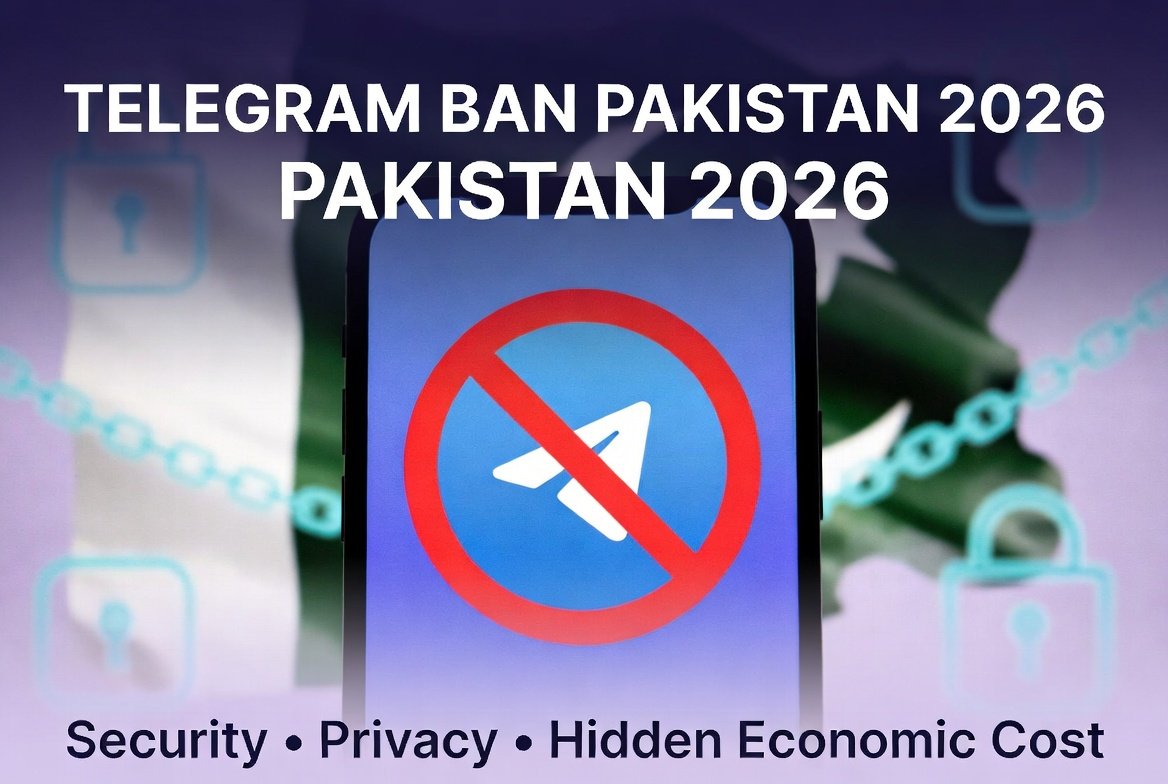
In a world where instant messaging apps connect millions for business, education, and family ties, millions of Pakistanis still struggle to access Telegram in 2026. The Telegram ban in Pakistan continues to spark frustration, debate, and creative workarounds. But why does this block persist years after it began in 2017?
This article explores the official reasons, the privacy versus security dilemma, and the often-overlooked economic fallout. Whether you’re a business owner, digital marketer, student, or concerned citizen, understanding the full picture can help you navigate these challenges more effectively.
The Current Status of Telegram in Pakistan (2026 Update)
As of 2026, Telegram remains largely inaccessible on major Pakistani ISPs without technical circumvention. The Pakistan Telecommunication Authority (PTA) enforces the block, which dates back to late 2017 but sees renewed attention amid broader social media regulations.
Users report inconsistent access—sometimes throttled, often fully blocked—depending on the network. This isn’t a complete nationwide blackout in practice, thanks to proxies and VPNs, but it creates daily hurdles for legitimate users. Recent petitions on platforms like Change.org highlight public demand for lifting the restrictions, citing unclear justification and impacts on free communication.
Official Reasons Behind the Telegram Ban
The PTA and government primarily cite national security and public order concerns. Telegram’s strong end-to-end encryption makes it challenging for authorities to monitor communications, raising fears about its use by extremist groups for propaganda, coordination, and spreading misinformation.
Another key issue is non-compliance. Telegram has a reputation for protecting user privacy and has reportedly resisted demands to share user data or block specific channels deemed objectionable. Under frameworks like the Prevention of Electronic Crimes Act (PECA) and its 2025 amendments, the government seeks greater cooperation from platforms on content related to terrorism, hate speech, or threats to state stability.
In 2025, Pakistan blocked accounts linked to militant groups across platforms, including Telegram, showing ongoing efforts to curb harmful content. While these actions address real threats, critics argue the blanket approach affects millions of ordinary users.
The Privacy vs. Security Balancing Act
Telegram stands out for its privacy features—secret chats, self-destructing messages, and minimal data collection. For many Pakistanis, especially journalists, activists, and businesses handling sensitive information, these tools provide essential protection.
However, the same features complicate law enforcement efforts. Governments worldwide grapple with this “going dark” problem, where encryption hinders investigations into serious crimes. Pakistan’s position aligns with concerns seen in other countries, but the implementation raises questions about proportionality.
Digital rights groups emphasize that broad blocks can chill free speech and drive users toward less secure alternatives or underground channels. A balanced approach might involve targeted moderation tools or local compliance frameworks rather than full bans.
The Hidden Economic Cost of the Telegram Ban
While security debates dominate headlines, the economic impact receives far less attention. Telegram powers vibrant communities: business channels for e-commerce, educational groups, freelance networks, and diaspora family connections.
- Businesses and Freelancers: Many small enterprises rely on Telegram for customer support, marketing, and sales coordination. Restrictions force costly shifts to other platforms or VPN dependency, adding expenses and reducing efficiency.
- Education and Skill Development: Tutors and students use channels for resource sharing and classes, especially in remote areas. Disruptions widen the digital divide.
- Broader Digital Economy: In a country with a growing youth population and IT ambitions, limiting access to innovative tools like Telegram’s bots and mini-apps can slow innovation and talent retention.
Estimates from similar social media restrictions suggest significant productivity losses, lost advertising revenue, and barriers to international collaboration. The “VPN economy” thrives as users pay for workarounds, but this diverts money from productive uses and exposes users to potential security risks from unreliable services.
Actionable Tips for Accessing and Using Telegram Responsibly in Pakistan
While we always recommend complying with local laws, here are practical insights for those with legitimate needs:
- Use Reputable VPNs: Opt for well-reviewed services with strong no-logs policies and obfuscated servers. Test speeds for your specific ISP (PTCL, Jazz, Zong, etc.).
- Explore Built-in Proxies: Telegram offers MTProto proxies—sometimes more reliable than full VPNs for basic access.
- Diversify Platforms: Maintain presence on compliant apps like WhatsApp Business or local alternatives while advocating for better solutions.
- Prioritize Security: Enable two-factor authentication and be cautious with shared channels, especially when using workarounds.
- Stay Informed: Follow official PTA announcements and digital rights updates for policy shifts.
Important Note: Always use these tools ethically and legally. Circumvention should not support illegal activities.
What the Future Might Hold
With evolving regulations like the Social Media Protection and Regulatory Authority (SMPRA), there’s potential for dialogue between the government and platforms. Greater transparency, targeted content removal instead of full bans, and clear compliance guidelines could resolve tensions while protecting users.
Successful models in other countries show that collaboration often yields better outcomes than confrontation. Pakistan’s young, tech-savvy population stands to benefit from policies that balance safety with digital growth.
Conclusion: Toward a Smarter Digital Future
The Telegram ban in Pakistan in 2026 reflects a genuine tension between security needs and the desire for open, private communication. While protecting against extremism and misinformation is crucial, the hidden economic and social costs deserve more attention.
At SMMpro, we believe informed discussions and responsible innovation can bridge these gaps. By understanding the “why” behind such policies, businesses and individuals can adapt strategically while supporting calls for balanced, transparent governance.
What are your thoughts on the Telegram situation in Pakistan? Have you faced challenges with access, or do you see opportunities in this landscape? Share in the comments below—we’d love to hear from you and continue the conversation.
This article is for informational purposes. For the latest official guidance, consult PTA resources or legal experts.
Frequently Asked Questions (FAQs)
Telegram remains banned in Pakistan primarily due to national security concerns. The Pakistan Telecommunication Authority (PTA) cites the app’s strong encryption and resistance to sharing user data as key reasons. The government believes Telegram is being misused for spreading extremism, terrorism-related content, and misinformation.
The ban was first enforced in November 2017. While there have been periods of relaxed enforcement, the block remains active as of 2026, especially on major mobile and broadband networks.
Not entirely. While Telegram is officially blocked by the PTA on most ISPs, many users can still access it using VPNs, proxies, or MTProto proxies. However, access is inconsistent and often unreliable without circumve
The ban affects thousands of businesses, freelancers, educators, and digital marketers who rely on Telegram for customer engagement, sales, community building, and education. It increases operational costs due to VPN usage and forces many to migrate to less effective platforms.
Using a VPN is currently legal in Pakistan for legitimate purposes. However, using it to engage in illegal activities is prohibited. Always follow local laws and use reputable VPN services.
There is no official timeline. Lifting the ban would likely require Telegram to comply with the government’s data-sharing and content-moderation demands under PECA regulations. Digital rights advocates continue to push for a more balanced approach.
Popular alternatives include WhatsApp, WhatsApp Business, Signal, Instagram, and Facebook Messenger. For broadcasting and large communities, many businesses are shifting to WhatsApp Channels.
Businesses should diversify their platforms, use reliable VPNs for operations, build email lists, and focus on compliant apps like WhatsApp Business. Working with professional social media agencies like SMMpro can help create effective multi-platform strategies.




What do you think?
The point about the hidden economic cost of the ban is particularly striking, as it forces local businesses to rely on workarounds that are neither secure nor efficient. It seems that beyond just privacy concerns, the lack of a native platform actually stifles digital trade growth for many small enterprises in Pakistan.
This website certainly has all of the information and facts I needed concerning
this subject and didn’t know who to ask.
Unquestionably imagine that that you stated. Your favourite reason seemed to be at the web the easiest
factor to consider of. I say to you, I certainly get
irked even as people think about issues that they just don’t recognize about.
You controlled to hit the nail upon the highest and also outlined out the entire
thing with no need side-effects , other people could
take a signal. Will likely be back to get more. Thanks
The article’s focus on the hidden economic costs of the ban really hits home, as many freelancers and businesses here are still scrambling for alternatives that lack Telegram’s robust privacy features. It’s frustrating to see how long the security concerns have prevented a solution that would actually boost Pakistan’s digital economy.
The insight regarding the hidden economic costs of this prolonged ban is particularly striking, as it highlights how restricting essential communication tools stifles broader digital commerce beyond just individual privacy concerns. It is also fascinating to see how the security arguments used in 2026 seem to have become a permanent fixture rather than a temporary measure, forcing local businesses to seek riskier alternatives instead of compliant solutions.
The point about the hidden economic costs of the ban is particularly striking, as it highlights how restricted access to a major communication tool stifles freelance opportunities and cross-border business in Pakistan. It’s fascinating that even in 2026, the security concerns cited by regulators seem to be overshadowing the tangible privacy benefits Telegram could offer the local population.
It’s going to be ending of mine day, except before
ending I am reading this great article to improve my knowledge.
It is alarming that the security concerns regarding encrypted communications have remained so entrenched that the ban persists well into 2026. I appreciate you highlighting the hidden economic costs, as many users might not realize how restricted access impacts local digital commerce and education. This deep dive into the privacy-security trade-off really clarifies the complexity behind such a long-standing prohibition.
Very good blog! Do you have any tips and hints for aspiring writers?
I’m planning to start my own blog soon but I’m a
little lost on everything. Would you recommend starting with a
free platform like WordPress or go for a paid option? There are so many choices out there that I’m completely confused ..
Any tips? Thanks a lot!
Usually I don’t read article on blogs, however I wish to say that
this write-up very forced me to check out and do so!
Your writing taste has been surprised me.
Thank you, very great post.
This is my first time visit at here and i am truly pleassant to read everthing at single place.