

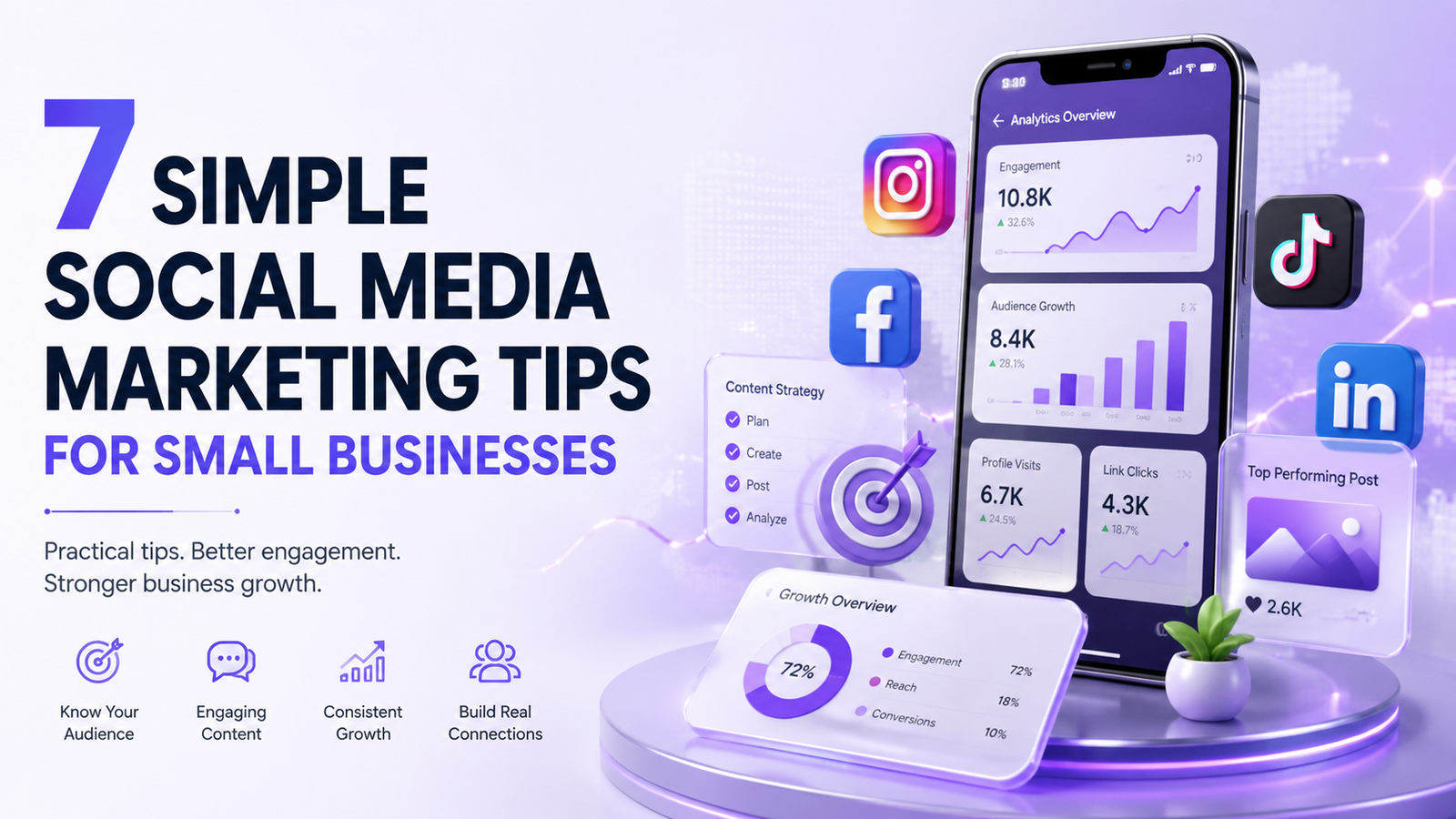
Social media has become one of the most useful tools for small businesses. It allows business owners to reach potential customers, build relationships, and promote their products or services without needing a large marketing budget.
However, simply creating social media accounts is not enough. Businesses need a clear and consistent strategy to get better results. Here are seven simple social media marketing tips that small businesses can start using today.
1. Choose the Right Social Media Platforms
You do not need to be active on every social media platform. Instead, focus on the platforms where your potential customers are most likely to spend their time.
For example, a business selling visual products may benefit from platforms such as Instagram and Pinterest, while a professional service provider may find LinkedIn more useful.
Start with one or two platforms and learn how your audience responds. You can expand to other platforms later.
2. Know Your Target Audience
Successful social media marketing starts with understanding your audience.
Think about who your ideal customer is. What problems do they have? What questions do they ask? What type of content do they enjoy?
When you understand your audience, it becomes easier to create posts that are useful and relevant to them. Instead of posting only about your products, try sharing information that helps solve your customers’ problems.
3. Create Useful and Engaging Content
People use social media to discover information, entertainment, ideas, and solutions. If every post is simply an advertisement, followers may lose interest.
Try creating different types of content, such as:
• Helpful tips and tutorials
• Short educational posts
• Customer questions and answers
• Product demonstrations
• Behind-the-scenes content
• Customer stories and testimonials
• Infographics and simple visuals
The goal is to provide value while naturally introducing your products or services.
4. Be Consistent
Consistency is more important than posting a large amount of content for a short period and then disappearing.
Create a simple posting schedule that you can realistically maintain. For example, a small business might begin with three useful posts each week.
You can also prepare several posts in advance. This makes it easier to stay active when you are busy with other parts of your business.
5. Use Visuals Carefully
Good visuals can help social media posts attract attention. You do not necessarily need expensive photography or professional equipment.
Simple, clean graphics can work well when they communicate an idea clearly. Tools such as Canva can help beginners create social media graphics without advanced design skills.
Make sure your images are easy to understand and match your business identity. Avoid filling a graphic with too much text.
6. Engage With Your Audience
Social media is not only about publishing posts. It is also about communication.
Respond to comments and messages when possible. Thank people who interact with your content and answer genuine questions.
You can also encourage conversation by asking simple questions in your posts. For example, a food business could ask followers about their favorite dish, while an education business could ask students which topic they find most difficult.
Building genuine conversations can help turn followers into a community around your business.
7. Track Your Results
You cannot improve your social media strategy if you do not know what is working.
Pay attention to basic metrics such as likes, comments, shares, saves, profile visits, and link clicks. Different types of content may produce different results.
For example, if educational posts consistently receive more shares than promotional posts, you may want to create more educational content.
Do not become discouraged if your first few posts receive little engagement. Social media growth usually takes time. Use your results to learn what your audience prefers and gradually improve your strategy.
Final Thoughts
Social media marketing does not have to be complicated or expensive. Small businesses can make meaningful progress by choosing the right platforms, understanding their audience, creating useful content, and maintaining a consistent presence.
The most important thing is to focus on helping people rather than constantly trying to sell to them. When your content provides genuine value and you communicate with your audience consistently, social media can become a useful part of your overall marketing strategy.
Start small, learn from your results, and improve your approach over time. With patience and consistency, social media can help a small business build visibility, trust, and stronger relationships with potential customers





What do you think?
[…] is where social media marketing tools can […]